9 hr
Al Ain Garden City Full-Day Discovery Tour
- Expert local guide
- Small group
- Skip-the-line access
- Free cancellation
Al Ain Oasis Tour from Abu Dhabi — UNESCO Heritage & Garden City Discovery
Step into 4,000 years of falaj irrigation, walk shaded date palm corridors
Compare fares, pick the fit — all bookings are mobile-voucher and eligible for free cancellation where shown.
9 hr
10 hr
8 hr
Planning an al ain oasis tour from abu dhabi is straightforward as this UNESCO World Heritage site offers free general access for all visitors to explore its historic falaj irrigation system. You can choose between independent exploration or optional rental enhancements to navigate the expansive palm groves.
|
Top pick General Admission Self-Guided Access |
Rental Services On-site Rentals | |
|---|---|---|
| Entry Fee | 0 AED | 0 AED |
| Access Method | Walking | Bicycle or Buggy |
| Wait Time | None | Minimal to moderate |
| Inclusions | Oasis pathways and Eco-Centre | Rental vehicle usage |
| Best for | First-timers | Fitness-minded visitors |
| See tickets & prices |
Verdict: For the best al ain oasis tour from abu dhabi experience, most visitors prefer free general entry while using bicycles to cover more of the 1,200-hectare site.
Worth it for culture seekers, skippable for casual sightseers
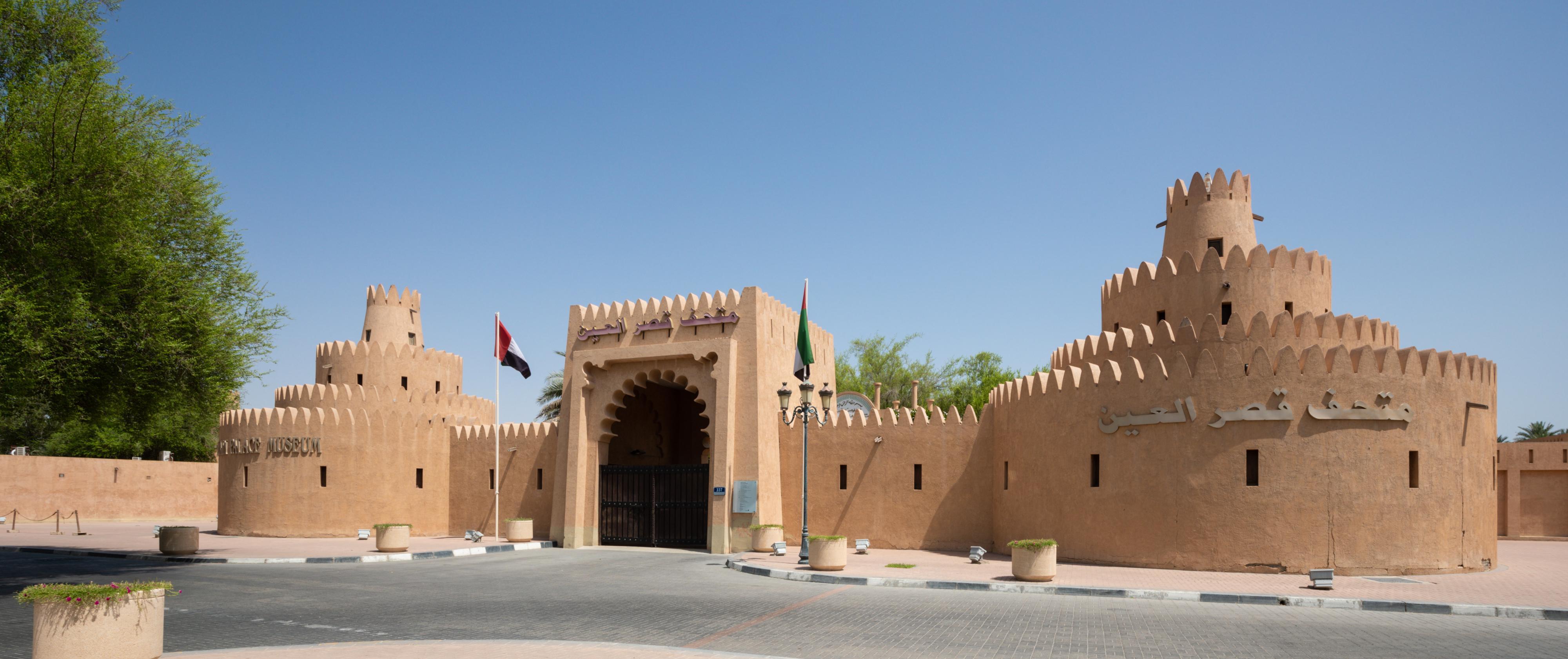
An al ain oasis tour from abu dhabi delivers genuine value if you care about traditional Emirati agriculture and UNESCO heritage. The oasis itself is free to enter—no ticket required—and guided full-day tours from Abu Dhabi typically bundle it with Al Ain Palace Museum, Jebel Hafeet mountain, and the camel market, running 250–350 AED with lunch included. You'll walk shaded falaj irrigation channels dating back 3,000 years and explore date palm groves that still supply local farms. The 90-minute visit rewards patient travelers interested in cultural landscapes and ancient water engineering, but expect minimal signage and low visual drama. If you're chasing Instagram backdrops or fast-paced sightseeing, the oasis tour from Abu Dhabi feels slow and underdeveloped. For those who appreciate living heritage and want to understand how desert communities sustained themselves, it's a rare window into pre-oil UAE that earns its place in any Al Ain itinerary.
Bottom line: Book al ain oasis tour from abu dhabi tickets if you value cultural depth over spectacle—it's the real working heritage behind the Emirates' polished tourism facade.
They complement each other; most visitors who do both call the Al Ain Oasis the more serene, cultural landmark, while Jebel Hafeet provides the more thrilling mountain landscape.
|
Top pick Al Ain Oasis |
Jebel Hafeet | |
|---|---|---|
| Focus | Ancient heritage and palm groves | |
| Landscape | Lush greenery and shaded paths | |
| Experience | Relaxed walking and history discovery | |
| Elevation | Near sea level | |
| Entrance fee | 0 AED (Free entry) | |
| Best season | Autumn to spring (cooler months) | |
| Suitability | Families and culture enthusiasts | |
| See tickets & prices |
Verdict: Choose the Al Ain Oasis for a quiet, shaded heritage walk, or head to Jebel Hafeet if you want an adventurous drive and panoramic vistas during your al ain oasis tour from abu dhabi tour.
Hand-picked experiences loved by thousands of travelers
9-10 hours
Free Cancellation
Discover the capital's grandest landmarks, from the majestic Grand Mosque to panoramic tower views
9-10 hours
Free Cancellation
Discover the capital's iconic landmarks including the stunning Sheikh Zayed Mosque and Presidential Palace
10 hours
Free Cancellation
Discover the UAE capital's architectural wonders, from the Grand Mosque to the Presidential Palace
6 hours
Free Cancellation
Explore Abu Dhabi's architectural masterpieces on a full-day guided excursion with pickup included
6 hours
Free Cancellation
Six-hour Arabian adventure featuring dune driving, sandboarding, camel encounters, and traditional camp dinner
4 hours
Free Cancellation
Explore Abu Dhabi's golden dunes with thrilling 4x4 adventures, traditional camel rides, and sandboarding fun
4-6 hours
Free Cancellation
Experience dune bashing, camel rides, sunset views, and a traditional BBQ feast with live performances
3-4 hours recommended
Free Cancellation
Explore a world-class museum showcasing humanity's shared heritage through art spanning millennia
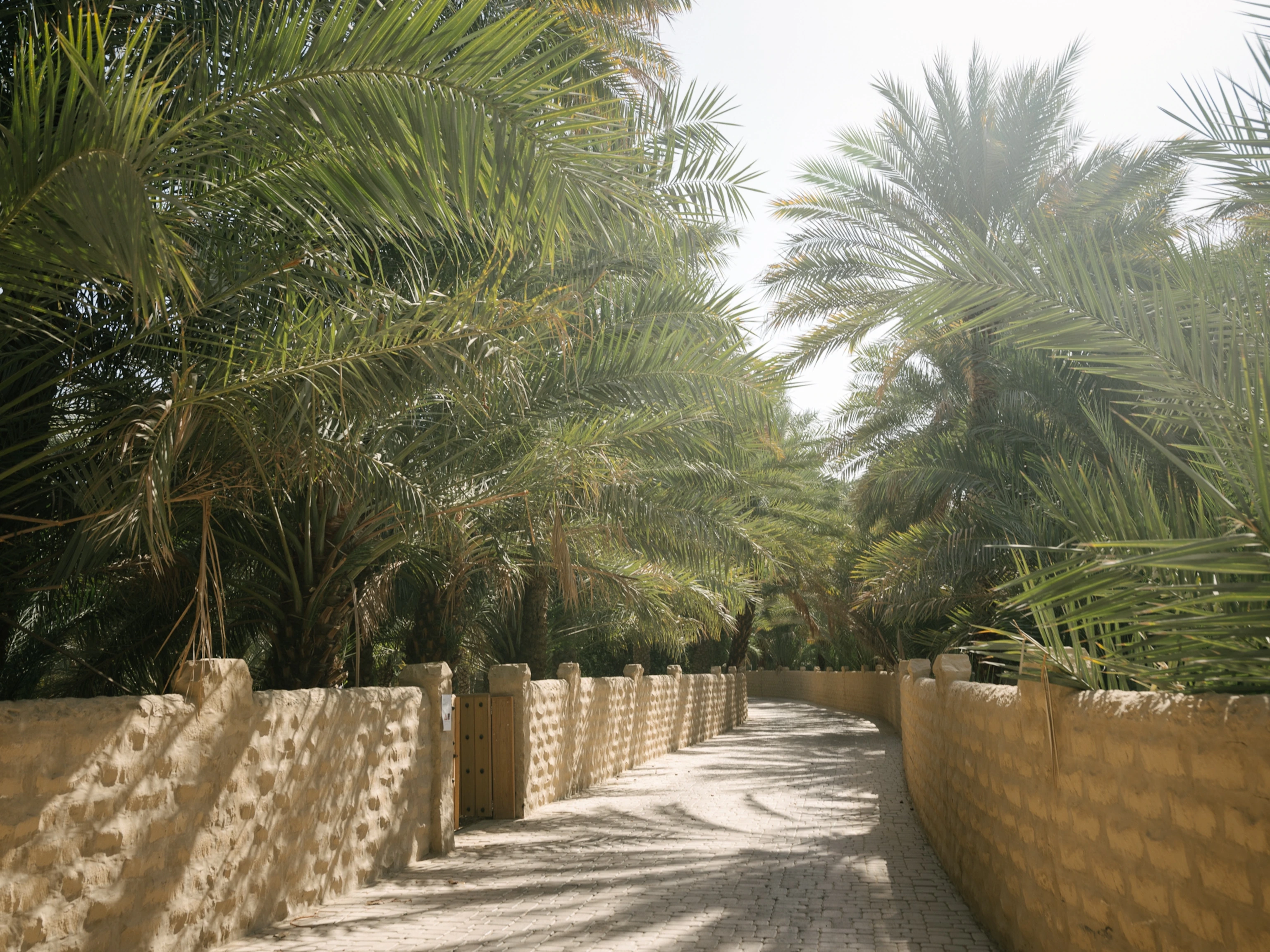
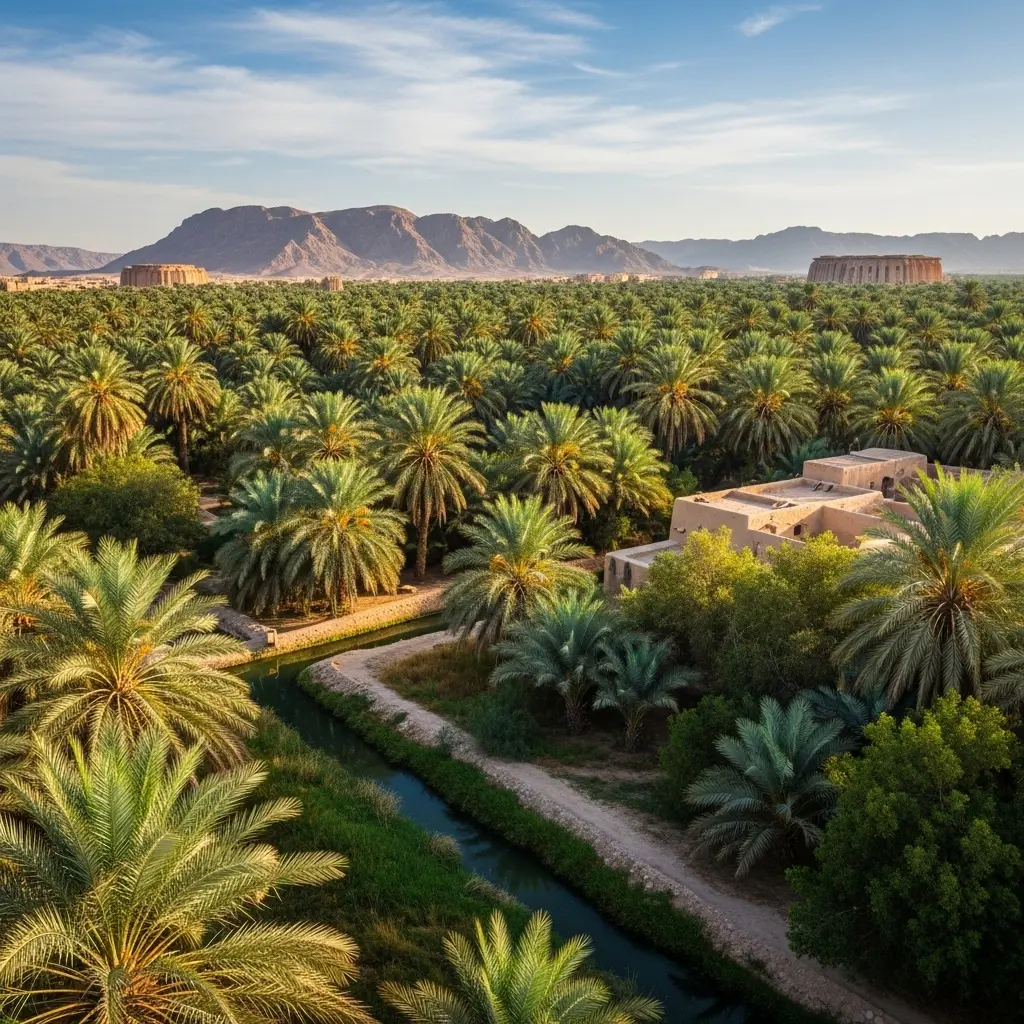
You arrive at the eco-center on Hessa bint Mohamed Street, where shaded parking gives way to a modern pavilion displaying cross-sections of the ancient falaj system. From the main entrance, gravel pathways lead into a lattice of earth-walled corridors lined with towering date palms.
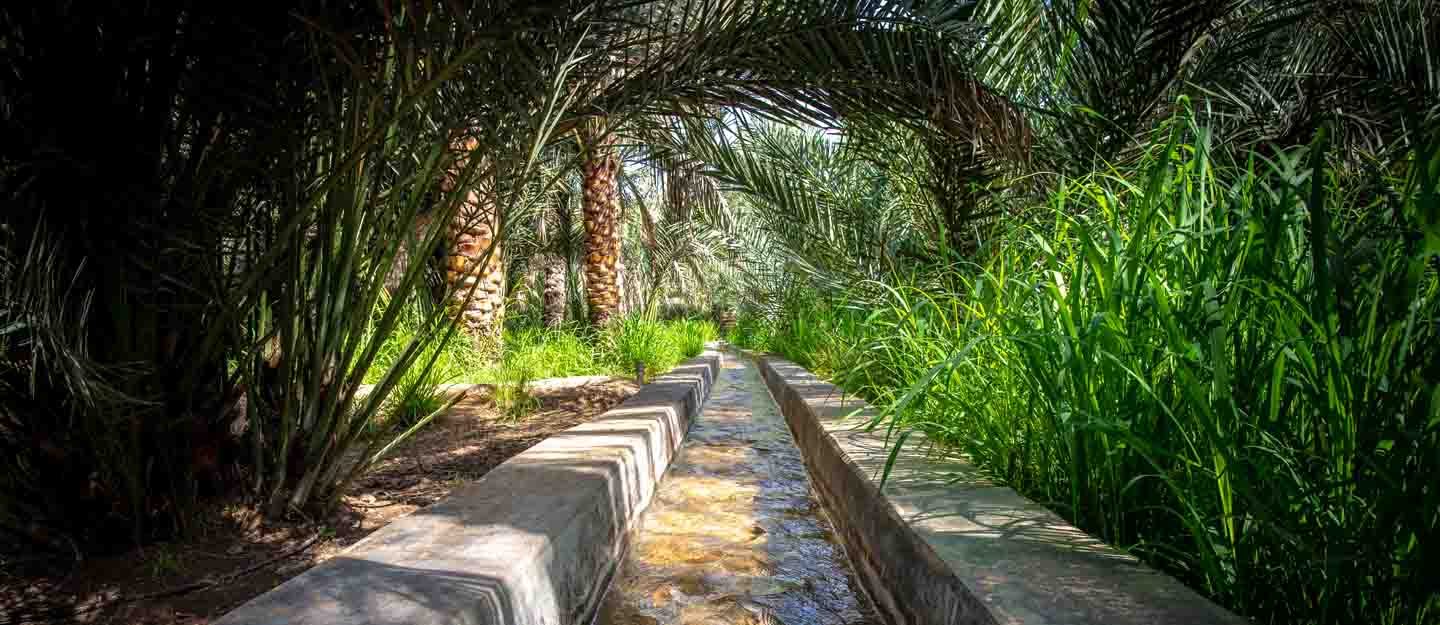
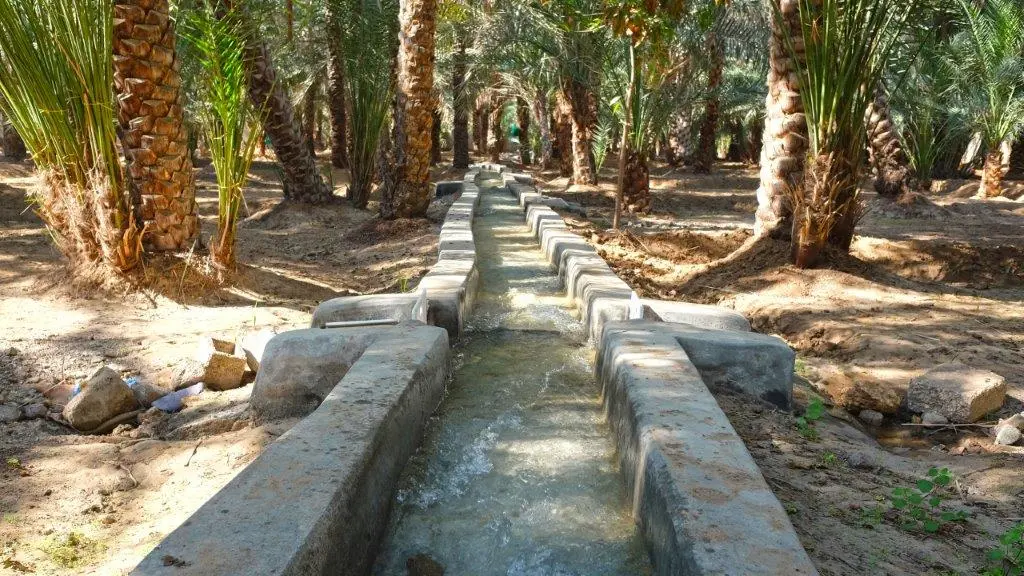
The temperature drops as you move deeper into the canopy, and the sound of flowing water becomes audible from the open irrigation channels running parallel to the trail.
You cross an adobe bridge to inspect a distribution node where water divides into three channels, each feeding a different cultivation zone. Signage explains the time-share rotation that allocates flow to individual farm plots. Further along, you pause at a viewing platform overlooking a dense grove of Barhi palms, their yellow fruit clusters visible against the green fronds. Ground-level beds of alfalfa and Rhodes grass grow in the filtered light.
The trail loops back through a restored section where stone-lined aflaj expose the engineering precision of the Bronze Age network. You exit near the visitor pavilion, where interpretive panels summarize the UNESCO criteria and display historical maps of the oasis extent before modern development reduced its footprint by forty percent.
All the details about your upcoming adventure in one place
Al Ain Oasis sustains 147,000 date palms across 3,000 acres using a falaj irrigation network engineered more than four millennia ago.
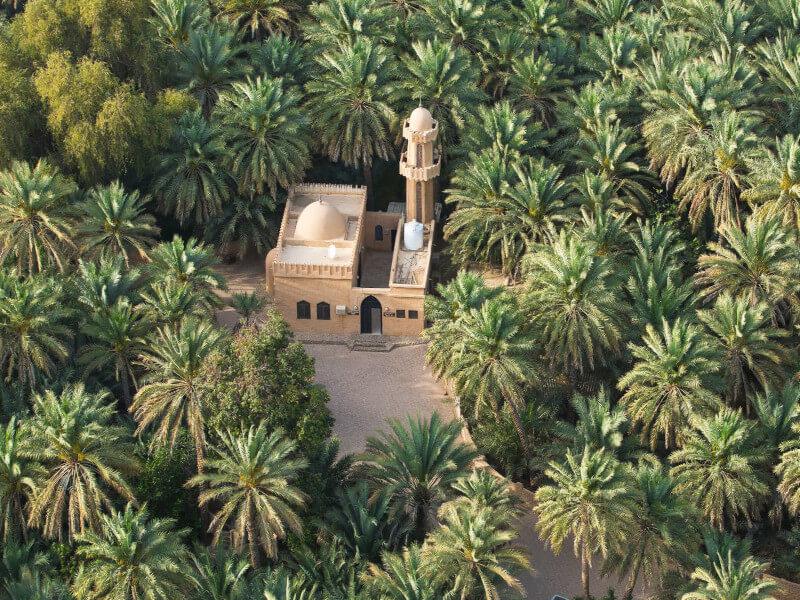
Gravity-fed channels still deliver groundwater from the Hajar foothills through hand-dug tunnels and open canals, maintaining the microclimate that drops temperatures fifteen degrees below the surrounding desert. UNESCO inscribed the site in 2011 as part of a serial cultural landscape recognizing the oasis settlements that made permanent habitation possible in the interior of the Arabian Peninsula.
The oasis operates as a working agricultural system. Farmers tend Khalas, Barhi, and Fardh date cultivars beneath a three-tier canopy structure: palms overhead, fruit trees at mid-height, and ground-level crops sheltered from wind and sun. Visitors navigate a seven-kilometer grid of pathways bordered by earth walls, crossing adobe bridges and passing stone-lined aflaj channels that date to the Bronze Age. The system diverts water through timed shares allocated by traditional measurements of shadow length, a method documented in manuscripts held at Al Ain's Qasr Al Muwaiji.
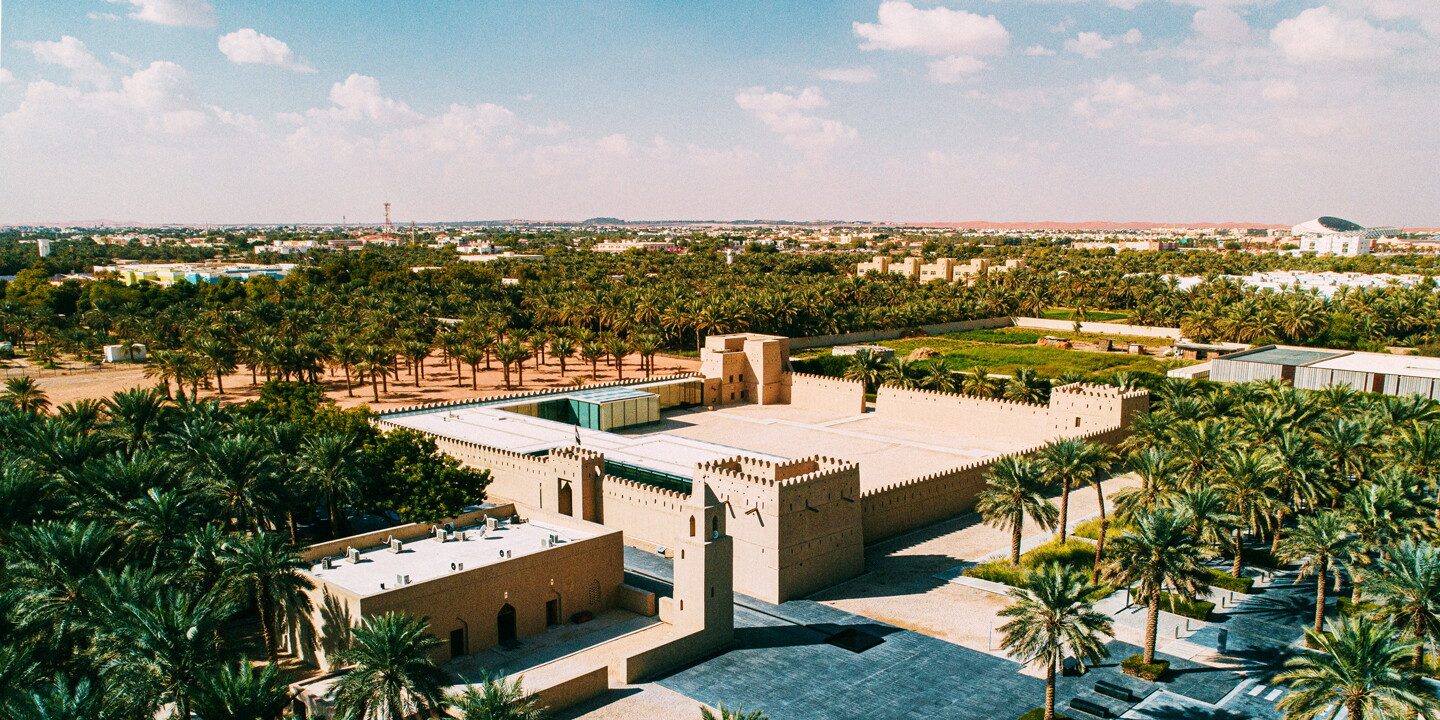
Al Ain Oasis tour from Abu Dhabi packages integrate the site into broader garden city itineraries that include Jebel Hafeet, the Al Ain National Museum, and the camel souk. Most tours depart early to reach the oasis during morning hours when irrigation flows are visible and temperatures remain manageable for extended walking. The eco-center near the main entrance houses models of falaj construction, archival photographs of oasis restoration work conducted between 2006 and 2010, and cross-sections showing the layered aquifer geology that feeds the system.
The oasis demonstrates adaptive agriculture in hyper-arid conditions. Annual rainfall in Al Ain averages 96 millimeters, yet the falaj network supports continuous cultivation by tapping fossil groundwater reserves. Modern sensors monitor flow rates and salinity while preserving the gravity-driven distribution logic. Signage along the trails identifies plant species by Arabic and Latin names, explaining the nitrogen-fixing role of fodder crops and the cooling effect of transpiration from 300,000 cubic meters of leaf surface area. The site remains free to enter and open daily, drawing researchers studying traditional water management systems applicable to contemporary desert agriculture challenges.

Gravity-fed channels still deliver groundwater from the Hajar foothills through hand-dug tunnels and open canals, maintaining the microclimate that drops temperatures fifteen degrees below the surrounding desert.
Modest clothing is recommended when visiting this cultural landmark to respect local customs. Ensure shoulders and knees are covered, especially when exploring areas near the Eco-Centre.
Standard backpacks are permitted, but large luggage should be kept in your vehicle. Security may perform visual checks at the entrance of your al ain oasis tour from abu dhabi.
Photography is welcome throughout the lush grounds, especially along the shaded falaj channels. Please respect the privacy of local farmers working in the private plots.
The oasis is an educational destination perfect for children to learn about ancient agriculture. Strollers are easily maneuverable on the wide, shaded trails.
The site features extensive, flat, and paved pathways that are fully wheelchair and stroller accessible. Staff at the Eco-Centre can provide assistance and guidance for those with mobility challenges.
While there are cafes near the oasis plaza, it is advisable to carry bottled water during your walk. There are limited food options deep within the palm groves, so plan accordingly.
Opening Hours
09:00–19:00 daily
Address
Hessa bint Mohamed Street, Al Mutawaa, Al Ain, Abu Dhabi, United Arab Emirates
Wheelchair Access
Fully accessible pathways
Best Time
09:00–11:00 for cooler temperatures
Storage
Not available on-site
Navigation
Interactive Eco-Centre maps provided
As entry to the Al Ain Oasis is free, there are no cancellation fees for general access. If booking a guided al ain oasis tour from abu dhabi, please refer to the specific operator's terms.
Recommended time
2-3 hours
Planning an al ain oasis tour from abu dhabi requires allowing sufficient time to explore the shaded palm groves and historic falaj irrigation channels at a leisurely pace. While independent travelers can manage the UNESCO heritage site in two hours, adding time allows for a deeper connection with these traditional agricultural landscapes. Most al ain oasis tour from abu dhabi tours experience higher visitor density by midday, so prioritizing early access ensures a peaceful walk through the pathways. Visitors seeking al ain oasis tour from abu dhabi tickets for guided experiences should coordinate their arrival to align with the cooling shade of the extensive canopy.
Crowd levels through the day
The Al Ain oasis has sustained human settlement for over 4,000 years through its ingenious falaj irrigation system. Archaeological evidence from the Bronze Age, circa 2500 BCE, confirms that early communities exploited underground aquifers to cultivate date palms and vegetables in this arid landscape. The falaj network—channels hewn from rock and earthworks that transport groundwater by gravity alone—earned UNESCO World Heritage status in 2011 as one of humanity's earliest hydraulic engineering achievements. By the Iron Age, around 1000 BCE, the oasis had expanded into a regional trade hub linking the Arabian interior with coastal ports. The modern falaj system in Al Ain took shape during the 17th and 18th centuries under the Bani Yas confederation. Skilled engineers called muhandis supervised the excavation of underground channels, some reaching depths of 30 meters and spanning several kilometers. These waterways transformed the oasis into a patchwork of shaded farm plots called aflaj, each plot irrigated on a strict time-rotation schedule managed by communal agreements. The Al Ain oasis tour from abu dhabi reveals how this ancient water-sharing system prevented conflict and ensured equitable distribution among date farmers. By 1800, the oasis sustained over 150,000 date palms and provided the agricultural backbone for what would become Abu Dhabi's ruling family. The 20th century brought mechanization and urban sprawl. In the 1960s, diesel pumps began supplementing gravity-fed channels, and concrete replaced earthen banks. Sheikh Zayed bin Sultan Al Nahyan, who grew up in Al Ain, championed the oasis's preservation after the UAE's formation in 1971. His government restored decaying falaj tunnels and replanted heritage palm varieties. Today, the oasis spans 1,200 hectares with approximately 147,000 date palms representing over 100 cultivars. Visitors walking the shaded pathways encounter working farms, educational exhibits on falaj maintenance, and the Eco-Centre documenting millennia of desert agriculture. The site remains a living laboratory where traditional irrigation methods coexist with modern conservation, offering insight into how human ingenuity conquered one of Earth's harshest climates.
Bronze Age settlers excavate the first falaj channels to tap underground aquifers and establish permanent farms.
Iron Age expansion transforms the oasis into a regional trade junction linking inland Arabia with Gulf coastal settlements.
Bani Yas engineers construct the modern falaj network with underground tunnels reaching 30 meters deep and spanning kilometers.
The oasis supports over 150,000 date palms under communal water-rotation agreements that prevent disputes among farmers.
Diesel pumps and concrete infrastructure begin supplementing traditional gravity-fed irrigation as urbanization accelerates.
Sheikh Zayed bin Sultan Al Nahyan launches restoration programs to preserve falaj tunnels and replant heritage palm cultivars.
UNESCO inscribes the Al Ain oasis and its falaj system as a World Heritage site recognizing 4,000 years of hydraulic engineering.
The oasis maintains 147,000 palms across 1,200 hectares with active farms, educational exhibits, and conservation research programs.
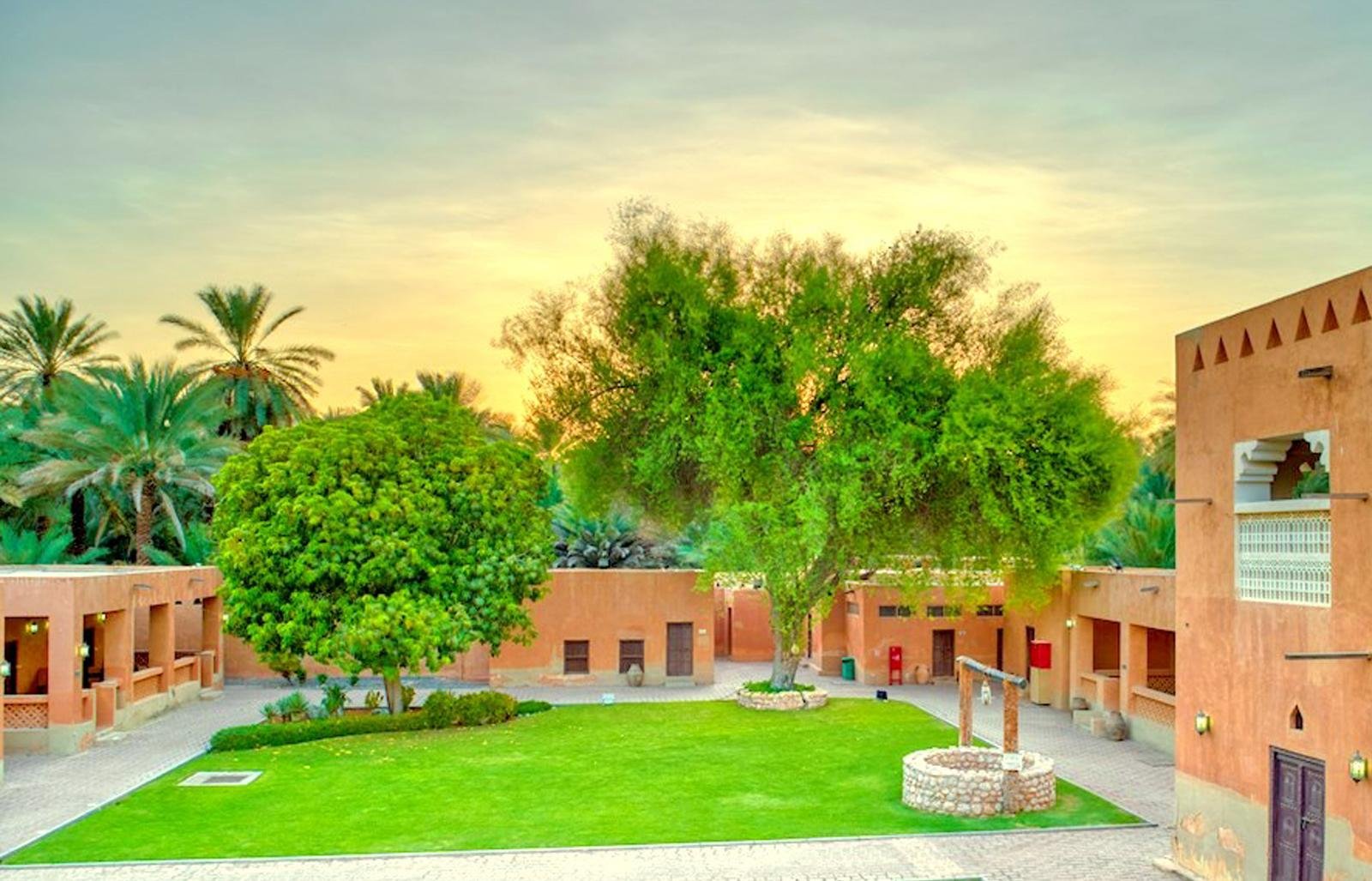
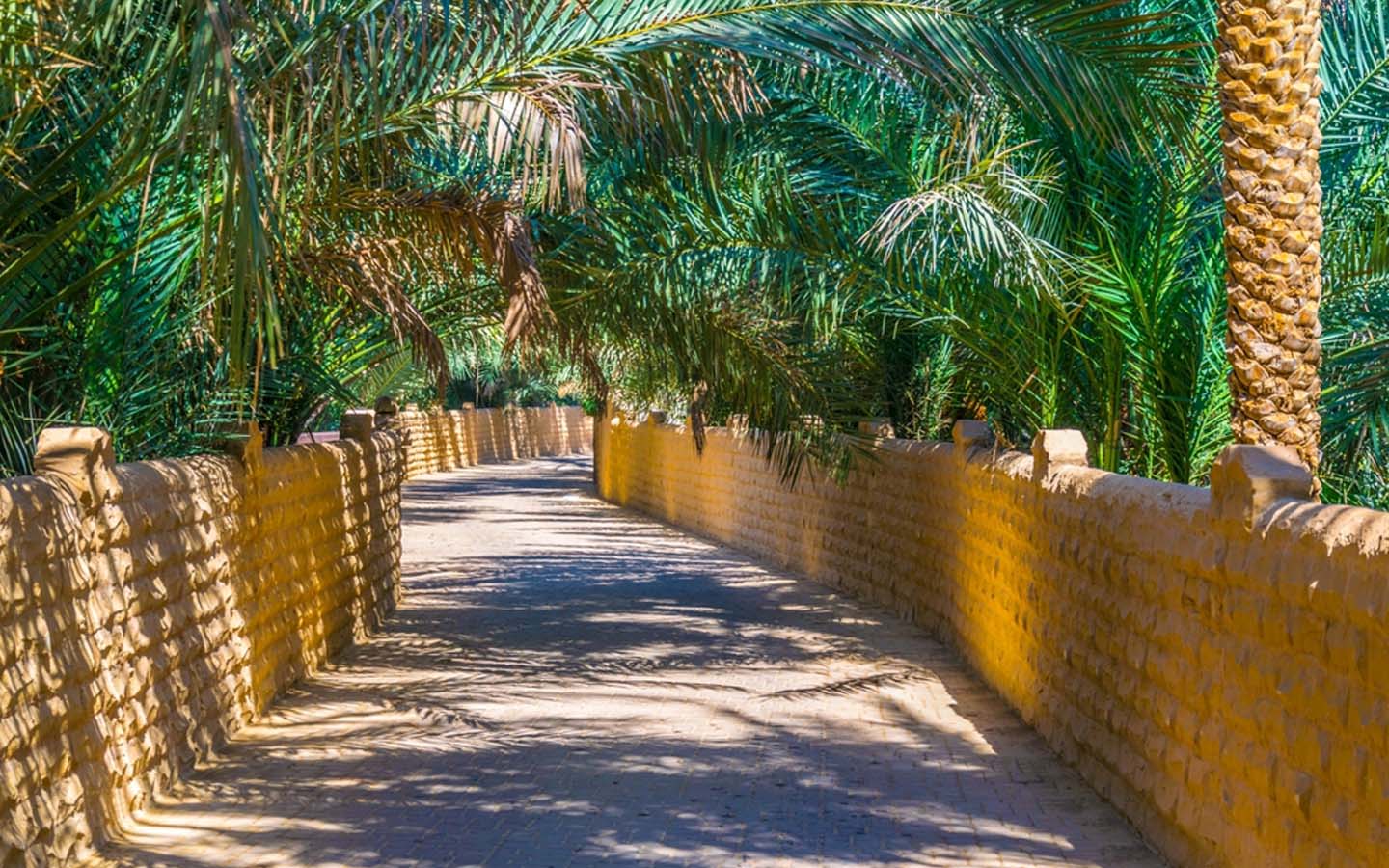
Stand directly beneath the dense canopy where filtered light creates geometric patterns on the shaded mud-brick paths. This central artery provides the iconic perspective for any al ain oasis tour from abu dhabi.
Focus your lens on the historic water distribution system flowing alongside the walkways. Position yourself low to capture the reflection of the date palms in the traditional canal water.
Capture the texture of the historic earthen architecture against the vibrant green of the surrounding date palms. These walls define the perimeter and offer a high-contrast backdrop for visitors taking an al ain oasis tour from abu dhabi tour.
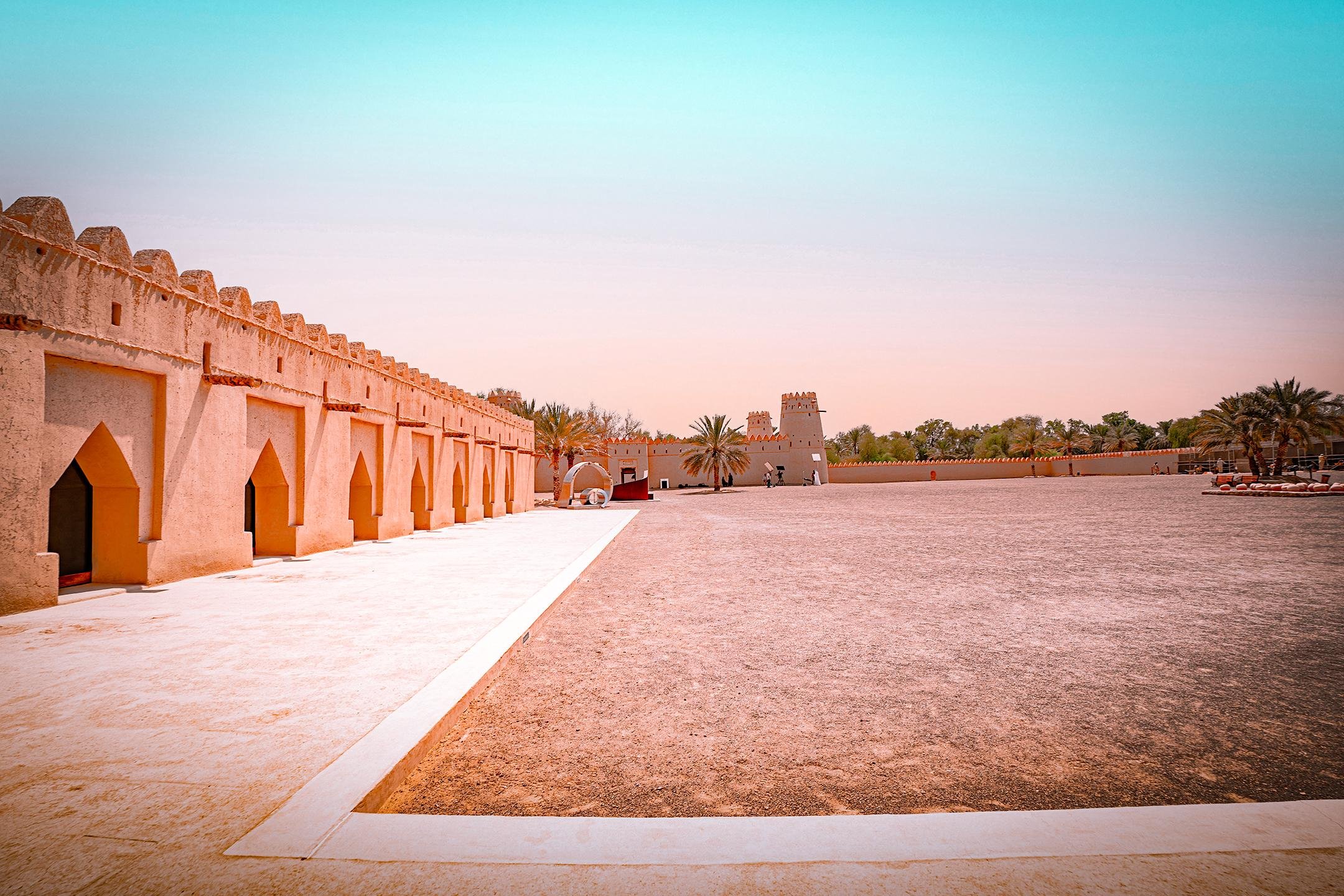
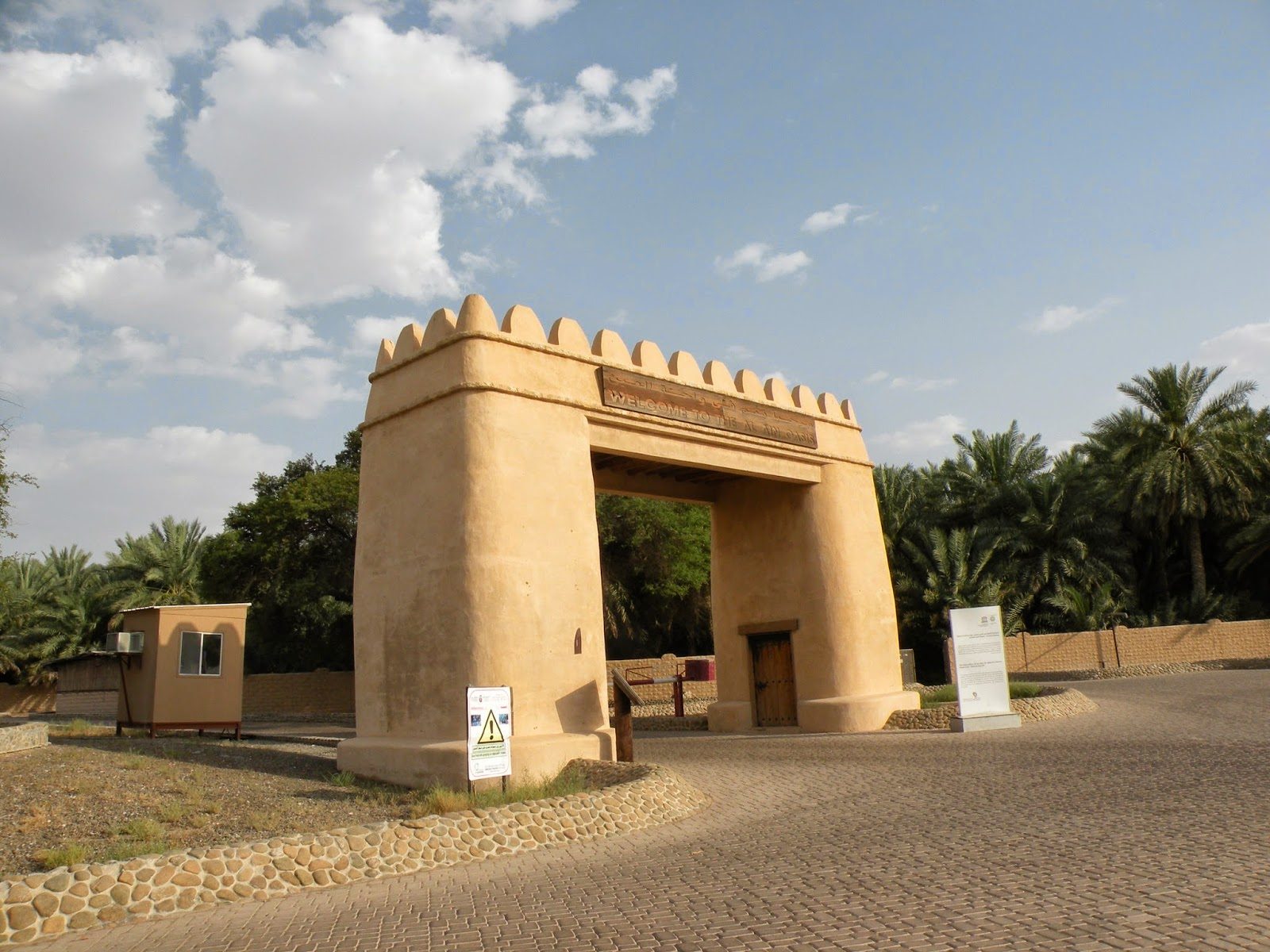
Frame the composition looking through the grand entry gate into the vast expanse of the UNESCO heritage site. This vantage point highlights the scale of the landscape and the contrast between desert and oasis.
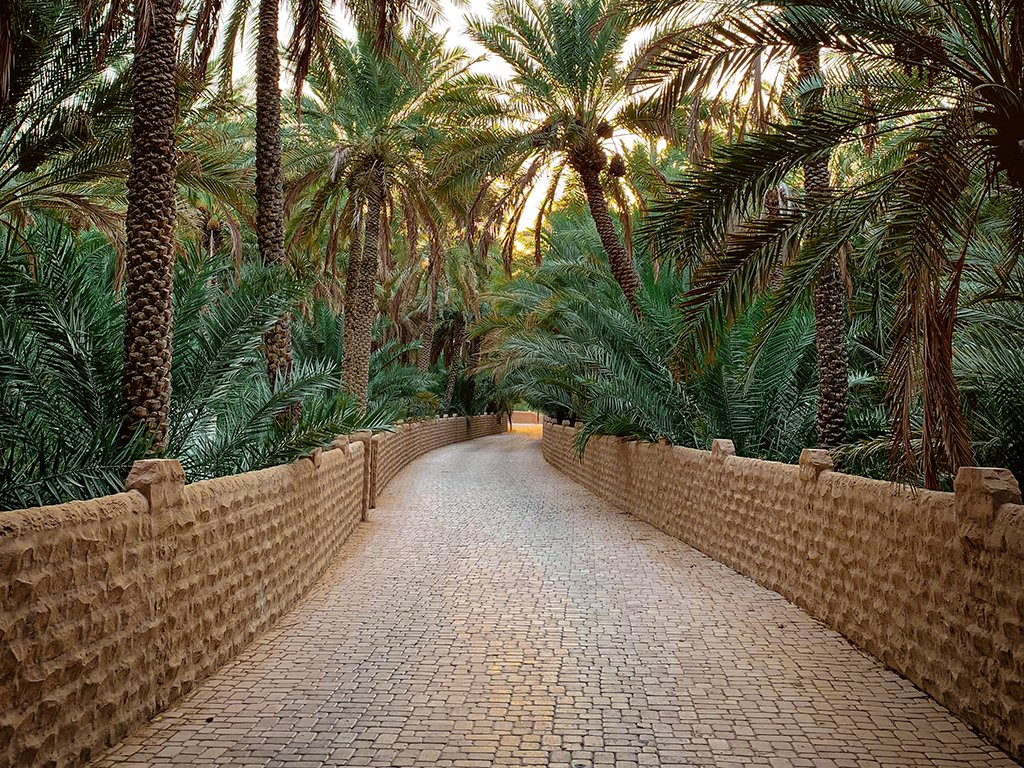
Utilize the natural framing of the canopy arches to capture the depth of the trail network as it winds through the plantation. This spot is popular for those seeking al ain oasis tour from abu dhabi tickets for photography purposes.
Visiting the oasis with children offers a serene escape, as the lush palm canopy provides natural cooling and a safe, expansive space for kids to explore. Navigating an al ain oasis tour from abu dhabi is straightforward for families, thanks to wide, well-maintained paths that comfortably accommodate strollers.
The main pathways are wide, flat, and paved, making them highly accessible for strollers and prams throughout the site.
If little legs get tired, you can rent bicycles or electric buggies at the entrance, which are popular for a quicker, more active tour around the palm groves.
Stop by the Eco-Centre near the West Gate; it features interactive exhibits that are engaging for all ages to learn about traditional falaj irrigation systems.
The dense palm tree canopy offers significant natural shade, keeping walking trails much cooler than the surrounding desert environment even on sunny days.
The site is best enjoyed at a leisurely, unhurried pace, allowing families to take frequent breaks on the benches provided along the paths.
Visitors embarking on an al ain oasis tour from abu dhabi will find a convenient selection of dining spots within the recently developed Al Ain Oasis Hub. These venues provide diverse choices, from casual cafes to specialty outlets, all set within the lush greenery of this UNESCO world heritage site.
An award-winning destination located at the heart of the oasis, focusing on sustainable practices and inspired by local agricultural heritage.
A popular dining outlet offering a modern menu with direct views of the surrounding palm gardens.
A contemporary space within the oasis hub perfect for a calm outdoor meal or coffee.
A stylish spot in the oasis grounds providing light bites and beverages in a serene setting.
A well-regarded bakery offering specialty treats and coffee, ideal for a quick break during your al ain oasis tour from abu dhabi tours.
A classic heritage restaurant located in Al Jimi, renowned for authentic Emirati dishes like machboos and luqaimat, popular for those completing their al ain oasis tour from abu dhabi tickets.
Everything you need to know for your journey
Entry to the Al Ain Oasis is 0 AED (Free entry for all visitors).
The site is open daily from 09:00–19:00.
Yes, the wide, paved paths of the Al Ain Oasis are fully accessible for wheelchairs.
The best arrival window is 09:00–11:00 to avoid the peak midday desert heat and enjoy the cooler morning temperatures.
You are encouraged to bring water, but please avoid consuming food within the sensitive farming areas.
Prohibited items include drones, alcohol, and professional recording equipment, which are not allowed during any al ain oasis tour from abu dhabi.
Yes, you can take personal photos, but please be respectful of the local farmers and their private property.
You can drive to Hessa bint Mohamed Street, Al Mutawaa, Al Ain, or take an intercity bus.
Yes, many operators provide a comprehensive al ain oasis tour from abu dhabi that includes transport and local guides.
Join thousands of happy travelers who have discovered this incredible experience
Book Your Experience Now